You need an Arlo SmartHub equipped with either a USB drive (VMB4540) or a microSD card (VMB5000), or an Arlo Go 2 that features its own integrated microSD slot, if you want to save Arlo footage without paying for a subscription. An older Arlo Base Station is a separate device and is not counted here. Local recording only stores motion clips. You also won’t get person, vehicle or package detection, and 24/7 recording isn’t included either.
Some Arlo cameras lack this capability. Arlo indicates that local storage is “not available for all Arlo devices,” so the answer hinges on your camera and hub. Below, the list begins with the configurations that tend to succeed most frequently. Afterward, the cameras are addressed where Arlo’s documentation is silent, followed by a solution for a hub that appears prepared yet records nothing.
When you set up a camera, a trial of Arlo Secure, the paid plan, typically begins and then concludes. That final section tells you what you hold on to and what you give up, letting you make your choice ahead of day 31.
1. How to Record Arlo Without Subscription on a SmartHub VMB4540 (USB Drive)
The SmartHub VMB4540 features a USB port. Your motion clips are saved on the USB drive plugged into it, locally with no plan.
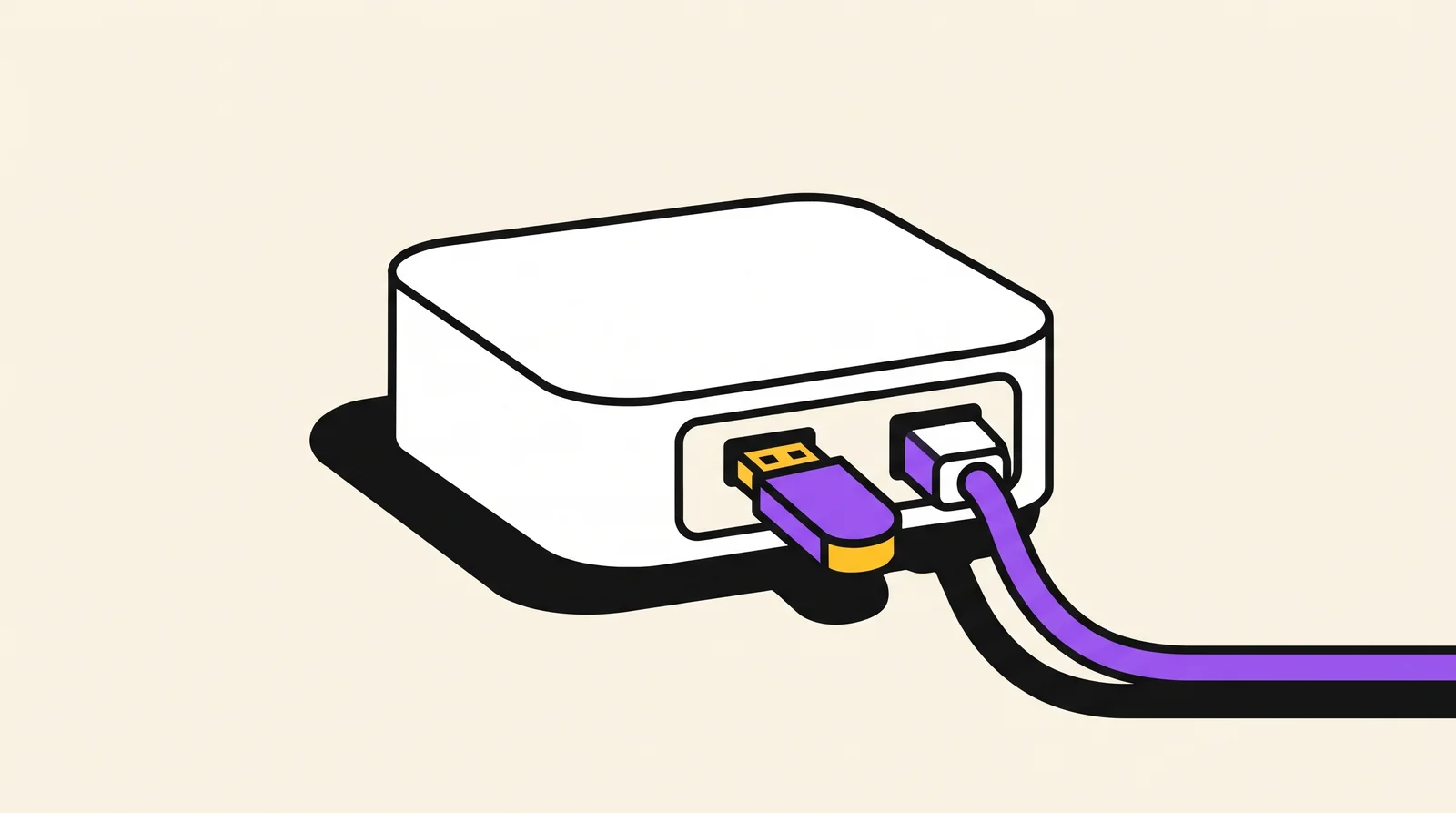
Your drive must meet these requirements:
- Capacity spans 16GB up to 2TB. When formatted, a bigger drive is reduced to 2TB.
- USB 2.0 ready, features a Type-A connector.
- A single partition exists on the drive.
- A standard USB flash drive or an external drive. A NAS (a network storage box) is not functional.
In this entry, the format step erases all data on the USB drive. First, transfer anything you want to save onto your computer. Never unplug the drive during formatting, since doing so could leave it permanently unusable.
- Look at the hub label to find the model. The label needs to display VMB4540. When uncertain about which hub you own, the VMB4000, VMB4540 and VMB5000 comparison explains how to distinguish between them.
- Insert the USB drive into the hub’s USB port.
- Launch the Arlo Secure app, then tap “Devices.”
- Pick your SmartHub, then tap “Storage Settings.”
- Enable “Record Locally.”
- Select “Local Storage Settings” ‹ “Format.” The drive gets formatted as FAT32.
- Hold off until the app indicates the storage is ready.
The names of menus may vary slightly across app versions. If one of them is not visible, check your hub’s settings for the closest “Storage” choice.
Once it works, the hub shows local storage as ready in the app. If motion is detected by a camera, the drive saves a clip. The hub, by default, overwrites the oldest clips once the drive’s free space falls below 20%.
2. How to Record Arlo Without Subscription on a SmartHub VMB5000 (microSD Card)
The SmartHub VMB5000 lacks a USB port. It uses a microSD card in its place. Many readers connect a flash drive to this hub and find no port to plug it into. This is the most frequent mix-up.
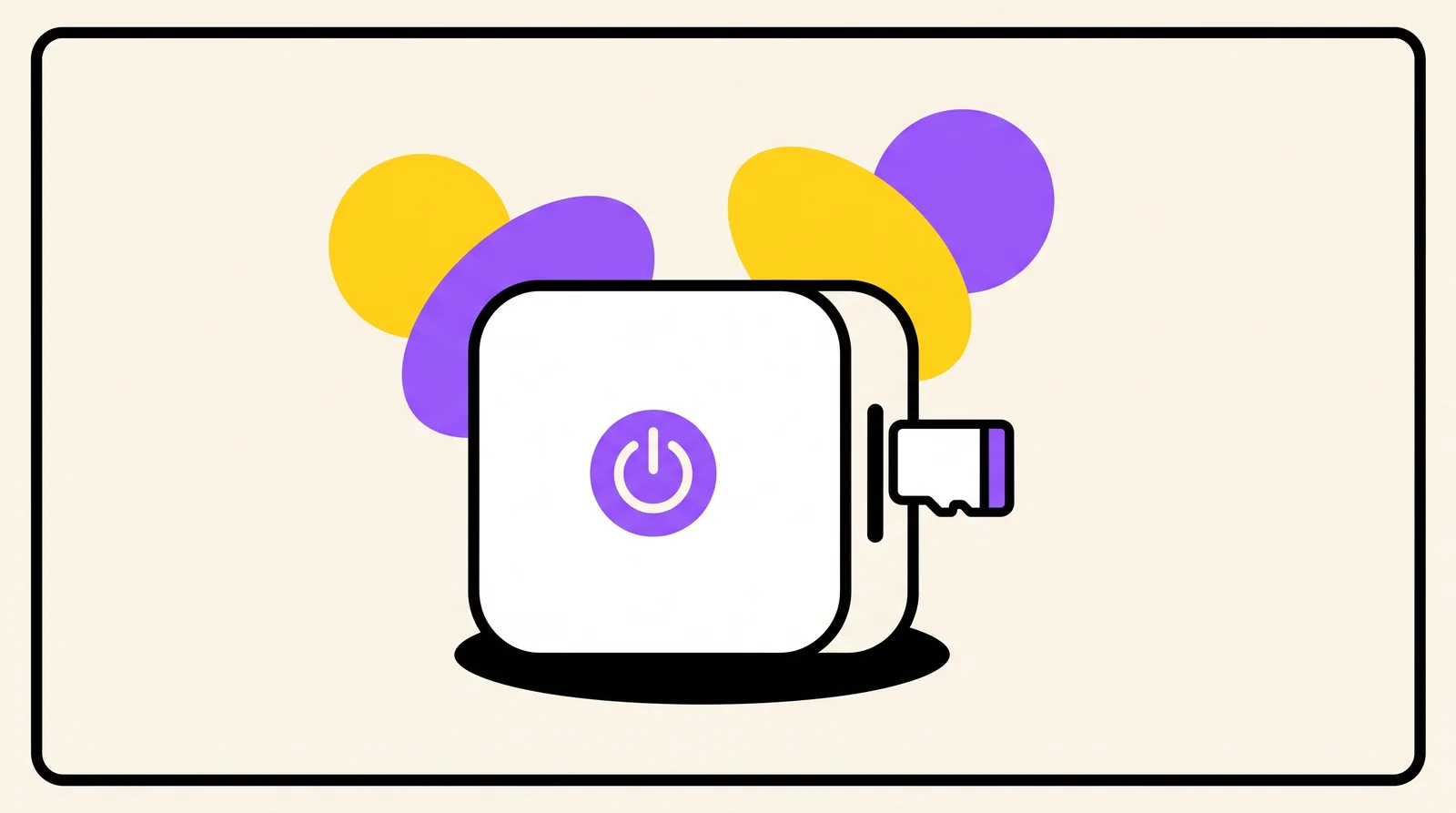
Use a microSD, microSDHC, or microSDXC card, up to Class 10 UHS-3 V90. A larger card stores more clips before the oldest ones get overwritten. Formatting in step 5 erases the card, so copy off anything you want to keep first.
- Look at the label on the hub to check its model. It should show VMB5000.
- Insert the microSD card into your hub’s slot.
- Launch the Arlo Secure app and tap “Devices.”
- Select your SmartHub, then choose “Storage Settings” and activate “Record Locally.”
- Press “Local Storage Settings” and then “Format,” waiting until the status indicates ready.
After setup succeeds, the hub stores motion recordings from its connected cameras on the card. The hub and the cameras stay powered, so recording persists through an internet outage.
3. How to Record on Arlo Go 2 Without a Subscription (microSD Card)
The Arlo Go 2 is among the cameras that require no hub for this. It stores footage locally via its built-in microSD card slot, though the card is sold separately.
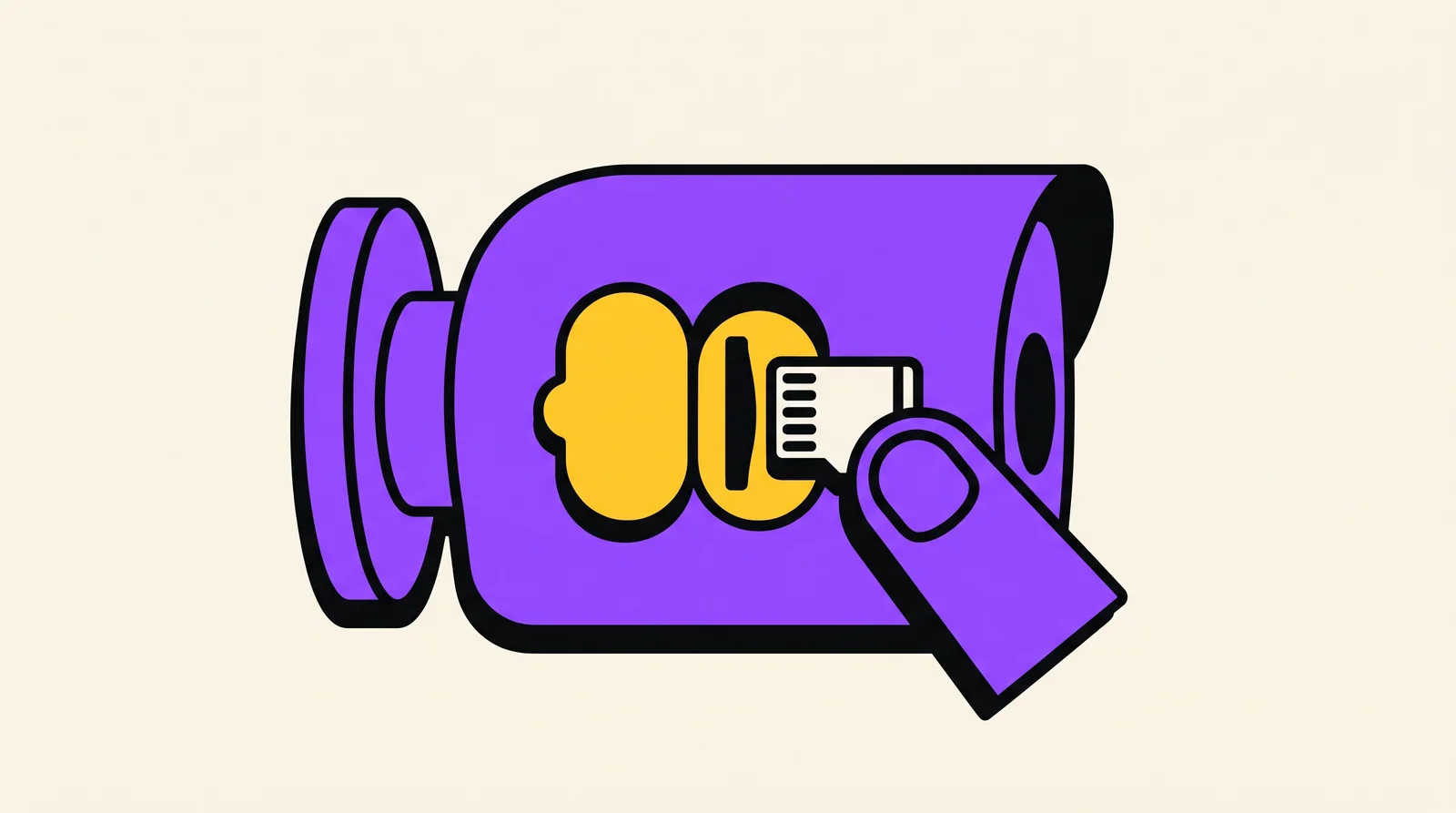
- Place a microSD card into the camera’s slot. The Go 2 setup guide shows you where the slot sits.
- Complete the camera setup within the Arlo Secure app.
- Open the app and select “Devices,” followed by the camera’s gear icon, then “Storage Settings,” before activating “Record Locally.”
- Move in front of the camera. Tap “Devices,” then the gear icon, followed by “Storage Settings” › “Local Storage Settings” › “Safely Eject Local Storage” › “Eject,” take out the card, and open the Arlo folder on your computer to view the new clip.
When it starts working, the camera keeps motion recordings on the memory card, and you watch them by taking out the card and plugging it into a computer. As with the other setups, this one only records motion clips and offers no smart detection.
Depending on the configuration, the Go 2 connects through cellular in certain cases and Wi-Fi in the rest. If you want to see how it compares to the first Go, the Arlo Go vs. Arlo Go 2 guide shows the differences.
4. How to Record on Arlo Pro 3 or Pro 4 Camera Without a Subscription
With these two cameras, the answer is less clear. Arlo states that the Pro 3 and the Pro 4 work with the VMB4540 and the VMB5000. Arlo says local storage can serve as your main storage if you are not subscribed to Arlo Secure. Nowhere do its pages spell out that a hub-paired Pro 3 or Pro 4 saves footage locally with zero plan at all. Community opinions vary.
Before you depend on it, run a test on your own system:
- Configure local storage on your hub as directed in entry 1 (VMB4540) or entry 2 (VMB5000).
- In the Arlo Secure app, pair your camera to the hub.
- Move in front of the camera to trigger it.
- Check the drive for a new clip. You can read the drive on a computer after you eject it safely in “Local Storage Settings.”
When your trial has ended, a clip that appears means your camera records locally with no plan. When none shows up, the camera probably requires a recording plan. Your model can be confirmed by Arlo support. The guide to identifying your Arlo camera assists you in providing them the precise model.
A hub drive keeps footage until free space falls under 20%. By default, the hub then records over the oldest clips.
5. Can You Record on Arlo Essential Spotlight Camera Without a Subscription?
Likely yes, provided you connect it to a SmartHub. Arlo confirms the Essential Spotlight Camera works with both the VMB4540 and VMB5000. Arlo says that even absent a plan or trial, you still receive live streaming, push notifications, two-way audio, auto zoom and tracking, plus local storage recording. Arlo states that auto zoom and tracking and local storage recording are “not available for all Arlo devices,” and the Essential Spotlight is not named on that list.
- Launch the Arlo Secure app and access the camera’s settings.
- Check that camera for a storage or local recording option. When you have a SmartHub, verify if the camera is listed under it.
- Configure the hub storage as indicated in entry 1 or entry 2, provided that option is available to you.
- Activate motion and look for a clip, as shown in entry 4.
The Arlo Video Doorbell appears on that identical SmartHub compatibility list. Just because it is an Arlo device, do not assume it records locally. Run the same test, and check the Arlo doorbell problems guide if it fails to behave.
No plan is needed for this camera to still offer live view, alerts, and two-way audio. Video History and Activity Zones are not included.
6. Arlo SmartHub Says Ready but Nothing Records
The app indicates local storage is ready, but no clips show up. Typically, these issues stem from an inactive setting, a camera not configured to capture motion, or storage removed prior to ejection.
- Choose your SmartHub after opening “Devices,” then select “Storage Settings.” Confirm that “Record Locally” is enabled.
- Verify that the camera is configured to detect motion. Check the mode or rule that applies to the camera in the app.
- Ensure the hub remains powered and connected.
- Check for a “not properly ejected” message. When you see it, launch “Local Storage Settings” and safely eject the storage, then reinsert it.
- Look in the app for a hub firmware update. A user shared that an update fixed a hub that showed ready but failed to save anything.
- Use another drive or card that meets the requirements in entry 1 or entry 2.
- Should the message persist, format the storage again. Formatting wipes all data from the storage.
Formatting a USB drive or microSD card in the hub and removing it mid-process can permanently damage the storage. Eject it from the app first.
Once repaired, a test motion event saves a clip to the drive or card. For hub lights that blink, refer to Arlo blinking lights. With an older Base Station as your hub, the Arlo Base Station problems guide is more suitable.
7. How to Record on Arlo Pro or Pro 2 Camera Without a Subscription
People who own the first Arlo Pro (VMC4030) and the Pro 2 are better off than those with newer cameras. Arlo says devices that had the free 7-day cloud storage will keep it, even after end of life. The Pro reached its end of life on July 1, 2023. On January 1, 2025, the Pro 2, Q and Q+ reached end of life. This complimentary cloud storage is unavailable on newer camera models. Arlo’s legacy cameras end-of-life page (new tab) also states that these owners retain local clip storage via a compatible SmartHub or Base Station.
- Launch the Arlo Secure app.
- You can find your recorded clips in the app.
- Pick a day to view clips from that day.
- For saving clips beyond 7 days, you’ll need to record them onto a compatible SmartHub or Base Station.
After it works, clips from the last 7 days appear in the app. The cloud deletes clips once they age past that window.
8. What You Can’t Record Without a Plan, and What to Check Before You Buy
Recording locally has constraints. Verify these limits before you purchase a hub or camera for this.
- Identify the precise camera model. Not every Arlo camera includes local storage.
- Pair the camera with a hub or the Go 2. Only the SmartHub VMB4540 (USB drive), the SmartHub VMB5000 (microSD card), and the Go 2 (microSD slot) are discussed in this section.
- Choose a drive or card that fits. A USB drive needs at least 16GB. Your USB drive needs to be USB 2.0 compatible and have a Type-A plug, with just one partition.
- Expect only motion clips. No person, vehicle, or package detection is available. Arlo Secure is still required for that.
- Don’t count on 24/7 recording. You need a paid plan for continuous video recording, and you cannot download those recordings.
- If you cannot view clips in the app, be prepared to read the drive on a computer.
Arlo’s page on what happens when the trial ends (new tab) details what remains and what disappears. Some features on that list are not supported by every camera.
If nothing worked
Reach out to Arlo support via Arlo’s local storage help page (new tab). Beforehand, gather the camera model, the hub model (VMB4540 or VMB5000), the capacity and kind of drive or card, the precise screen message, and the hub light color. For a camera question, ask whether your model records locally without a plan. guide to common Arlo camera problems might also address your symptom.
Frequently Asked Questions
Can I watch Arlo local recordings when I’m away from home?
It depends on your network setup and hub. The storage can always be ejected safely through the app, allowing you to read it on a computer.
Does local recording continue if my internet goes out?
Yes. Recording keeps going through an internet outage provided the hub and your cameras stay powered.
What stops working on day 31 when the Arlo Secure trial ends?
You lose features like Video History and Activity Zones. Live streaming, push notifications, and two-way audio stay with you. Auto zoom, tracking, and local storage recording remain available only on the devices that support them.
Written with AI assistance. Facts and sources are checked automatically before publication. How we work