First, power cycle your router and hold off until it’s completely back online. Restart the Arlo hub next and verify its Ethernet cable is plugged into a LAN port on the router. This sequence resolves most base stations that appear offline, show an amber light, or will not sync a camera.
Arlo labels its older devices “Base Stations” and its newer models “SmartHubs.” Each connects to your router via an Ethernet cable (a wired network cable) and communicates with your cameras wirelessly. These solutions apply to both models, and if the indicators vary, you can identify your specific type.
The list begins with the most frequent problem, an offline hub, and ends with the rarest. It covers the lights, syncing cameras, a new router, resets, camera compatibility, and the older VMB4000.
1. Arlo Base Station Offline or Won’t Connect to the Internet
The hub has lost its connection to the router, or the router has lost the Internet. A loose cable or a faulty router port is less common but simple to check.
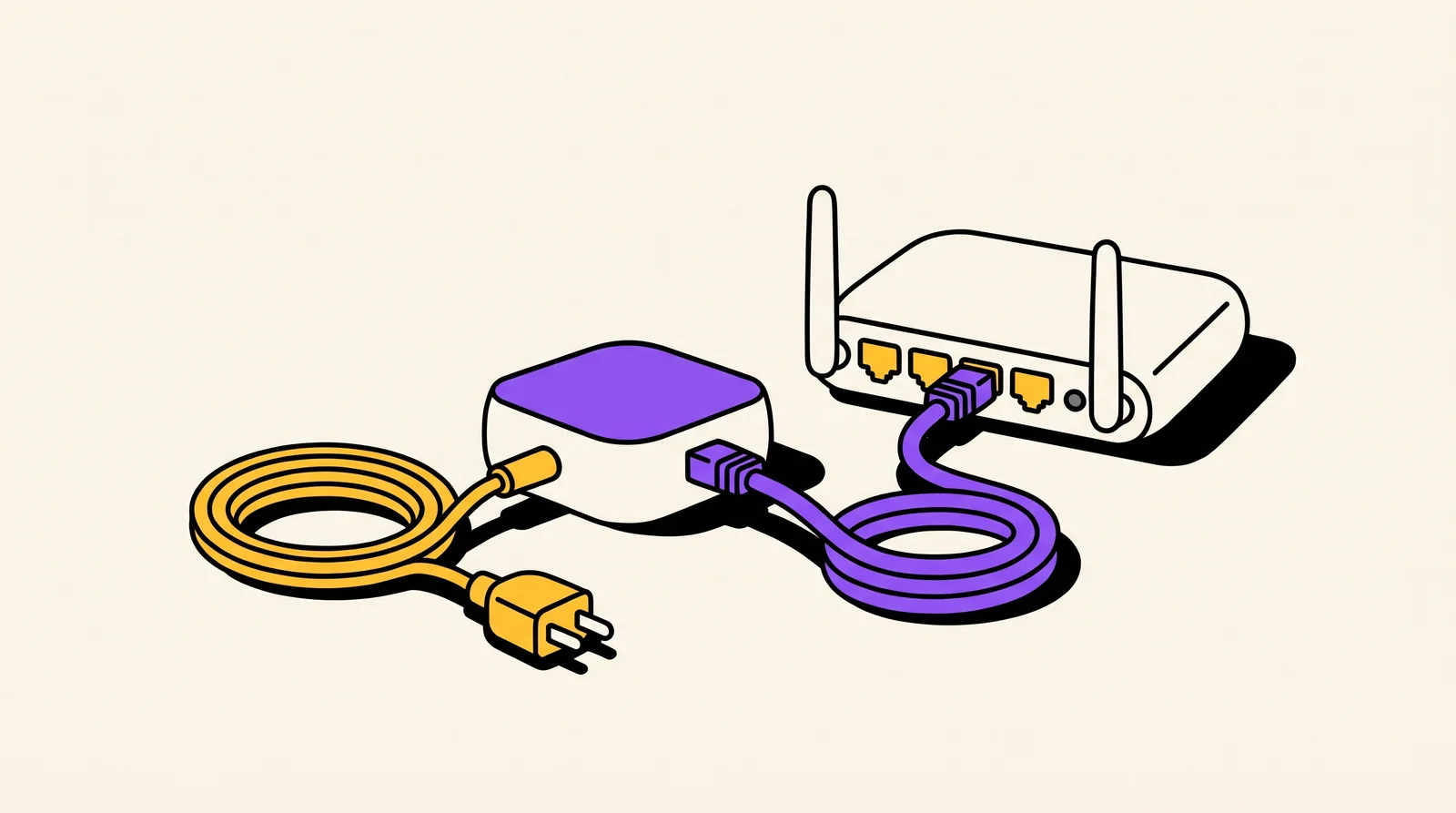
Power cycling both your router and hub will briefly disconnect your cameras for several minutes. Choose a moment when that gap is acceptable to you.
- Locate the model number on the hub’s label. It starts with VMB. The VMB5000, VMB4540 and VMB4500 are single-LED SmartHubs featuring one light on top. The VMB4000, VMB3500 and VMB3000 are multi-LED Base Stations with several lights.
- Check the light. A single-LED SmartHub shows solid blue when it is connected to the Internet, solid amber when there is an error or connection problem, and no light when it has no power. With a multi-LED Base Station, if the Internet light is amber, the hub can reach the router, but the router has no Internet access; if the Internet light is off, the hub is not connected to a router. You can find the complete list in the following entry.
- Check the Internet connection using a different device. Using your phone, open a website while it is connected to your home Wi-Fi. When a page fails to load, your router or Internet provider is the problem, so look at your provider’s outage page or app.
- Restart in the correct sequence. Disconnect the hub’s power. Disconnect the router from power, along with the modem if it is a separate unit. Hold on for 2 minutes. Connect the modem and router first, then wait for their Internet light to stabilize. Next, connect the hub.
- Inspect the Ethernet cable. Insert it securely at both ends. On the router, it must be plugged into a numbered LAN port, not the port labeled “WAN” or “Internet.” Switch to another LAN port, then try another Ethernet cable.
- Wait about 2 minutes after the hub powers on. While a multi-LED Base Station is booting, its Power light remains amber.
After it is fixed, a single-LED SmartHub displays solid blue, a multi-LED Base Station stops showing an amber or dark Internet light, and the Arlo app marks the hub as online.
A hub connects to the router by cable, so it never asks for your Wi-Fi password. The password you enter in the Arlo app is the password for your Arlo account. Should you forget it, select the forgot-password option on the login screen. See Arlo Wi-Fi password answers for your router’s Wi-Fi password.
If it remains offline after step 6, proceed to the new-router entry (4) and the reset entry (5).
2. Arlo Smart Hub Blinking Orange
The meaning, which varies by hub type, is indicated by the color and pattern, revealing which issue you face. Unlike a multi-LED Base Station, a single-LED SmartHub interprets a blinking amber light differently. Arlo’s LED guide (new tab) lists every pattern.
| Hub type | Light | What it means |
|---|---|---|
| Single-LED (VMB5000, VMB4540, VMB4500) | Solid blue | Connected to the Internet |
| Single-LED | Solid amber | Error or connection problem |
| Single-LED | Slow blinking amber | Camera not found, out of range, or another connection error |
| Single-LED | Alternating blue and amber | Firmware update or reset in progress |
| Single-LED | Off | No power |
| Multi-LED (VMB4000, VMB3500, VMB3000) | Internet light amber | Connected to the router, but no Internet |
| Multi-LED | Internet light off | Not connected to a router |
| Multi-LED | Power light amber | Booting |
| Multi-LED | Camera light amber | Camera too far away or weak signal |
| Multi-LED | Power light blinking green | Firmware update in progress |
After you hold down the “Sync” button, a multi-LED Base Station can also flash amber. Entry 3 addresses that.
- Find the model number on your hub’s label to identify its type.
- A solid amber light on your single-LED SmartHub means you should work through the offline steps from entry 1, beginning with restarting the router and checking the Ethernet cable.
- A slow-blinking amber light on your single-LED SmartHub: launch the Arlo app and see which camera is offline. Bring that camera nearer to the hub, and remove walls or big items between them if you can. If the battery is low, recharge the camera.
- Amber Camera light on a multi-LED Base Station: follow the same instructions as step 3. The camera is positioned too far from the hub or its signal is weak.
- Amber Internet light on a multi-LED Base Station: the router is working properly, but the Internet connection is not reaching it. Check with your Internet provider, and power cycle the modem and router.
- If the Power light alternates blue and amber, or blinks green: wait. The hub is updating or resetting, and it will return to normal on its own.
On a multi-LED Base Station, a blinking green Power light indicates a firmware update, which is the hub’s internal software. Blue and amber lights that alternate on a single-LED SmartHub signal an update or a reset. Wait until the light changes, because cutting the power in the middle can interrupt it.
For camera lights, refer to Arlo blinking lights explained.
3. Arlo Camera Won’t Sync to the Base Station
Pairing a camera with the hub happens during syncing. Syncing usually fails when the hub is offline, the camera is out of range of the hub, the battery is low, or multiple cameras are syncing simultaneously.
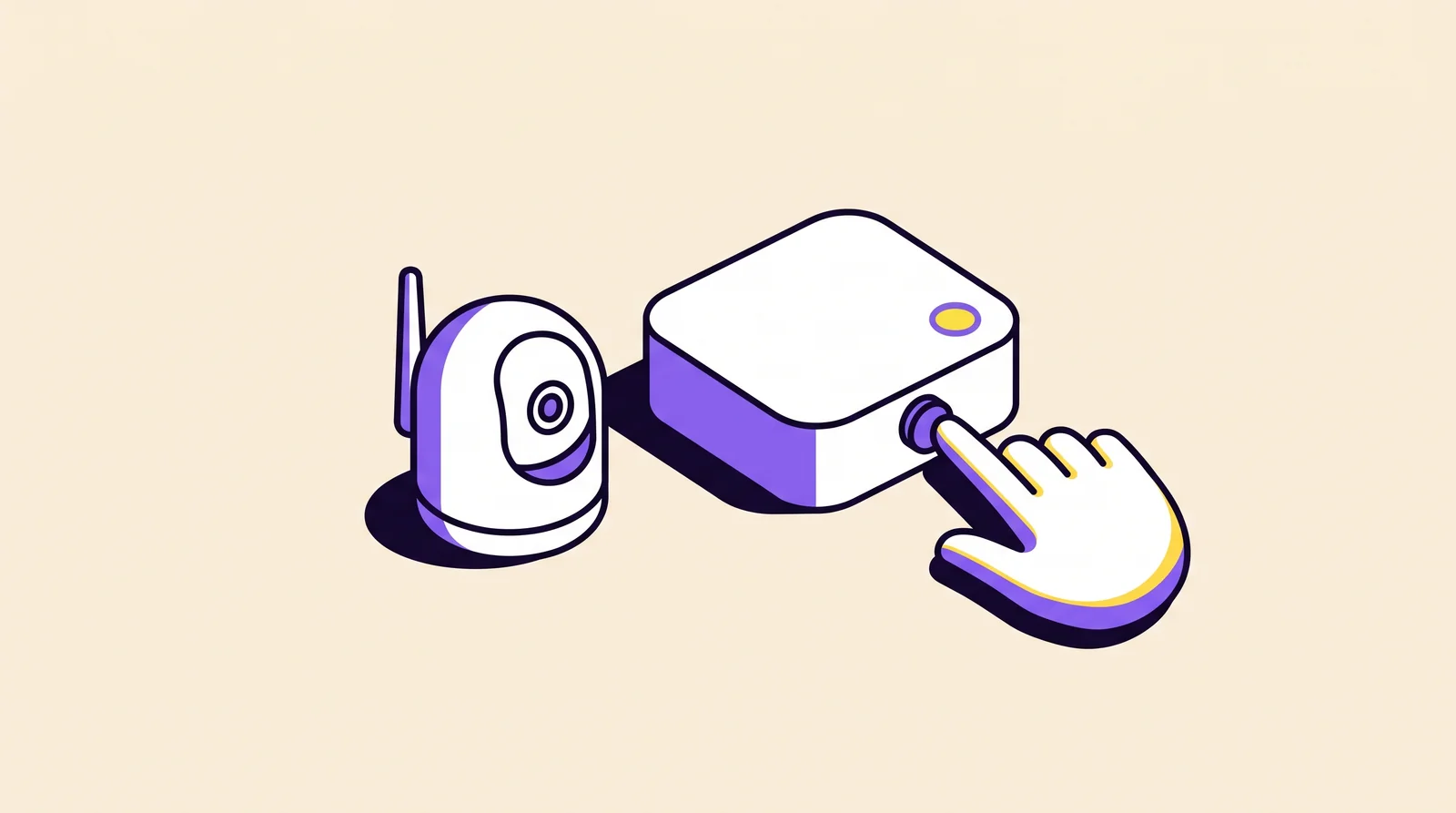
- First, confirm that the hub is online (solid blue on a single-LED SmartHub, no amber or dark Internet light on a multi-LED Base Station). If not, begin with entry 1.
- Pair a single camera at a time. Leave the rest aside until you finish the first one.
- In the Arlo app, select your SmartHub or Base Station for the connection. Avoid selecting “Connect without SmartHub.”
- While syncing, keep the camera 3 to 10 feet (about 1 to 3 m) away from the hub.
- If you have a Base Station, press the “Sync” button on it when the app asks. A single-LED SmartHub skips this button press.
- When the camera battery is low, charge it for at least 30 minutes, then try again.
- Check the light on a Base Station. A flashing green light above the camera icon indicates it is syncing. A blinking amber light after you hold “Sync” down means wait 15 minutes, then try again.
- After adding the camera, place it in its final location and confirm the app shows it as online. Next, sync the following camera.
- If problems persist, factory reset the camera and then the hub (see entry 5), then give it another shot.
After the issue is resolved, the camera appears under your hub in the app, and the hub no longer displays an amber light for it. For any other camera issues following a sync, refer to Arlo camera problems.
4. Arlo Base Station Won’t Connect After a New Router
The hub might be connected to a port that fails to carry its signal, while a new router assigns different configurations. The new Wi-Fi name is irrelevant because the hub is wired.
- Detach the Ethernet cable from your old router, then connect it to a numbered LAN port on the new router rather than the “WAN” or “Internet” port.
- Confirm the new router itself is connected to the internet by opening a website on a different device.
- Look at the router’s settings for its wired ports. Should a LAN port be deactivated, activate it or select an alternative port. If your network uses MAC filtering, a setup where only approved gadgets can connect, put the hub on that access list.
- Reboot the hub: disconnect its power, wait 30 seconds and plug it back in. Pause for roughly 2 minutes.
- If your new router is a mesh system (several units that spread Wi-Fi), connect the hub to the main router unit first.
- Cameras that link directly to your Wi-Fi without a hub require the new Wi-Fi name (known as the SSID) and password in the Arlo app. Cameras connecting to the hub do not.
- If the hub remains offline, proceed to entry 5.
The Arlo app indicates the hub is back online, and a single-LED SmartHub shows solid blue.
5. Arlo Base Station Won’t Reset or Needs a Factory Reset
Try the restart from entry 1 before attempting a reset. A reset is the final step, and Arlo also calls it the last resort for sync problems. A hub that appears not to reset is often still busy, or lacks power.
- Verify the power supply. Should no light appear, attempt another outlet and ensure the power plug is inserted completely.
- Check the light. On a single-LED SmartHub, blue and amber lights that alternate indicate an update or a reset is currently underway. Let it complete.
- Power cycle the hub and router following the sequence specified in entry 1, then check if it returns to online status.
A factory reset clears the hub’s settings and disconnects it from your cameras. Your cameras won’t record through the hub until you set it up again and sync each camera, so that part of your home is not covered.
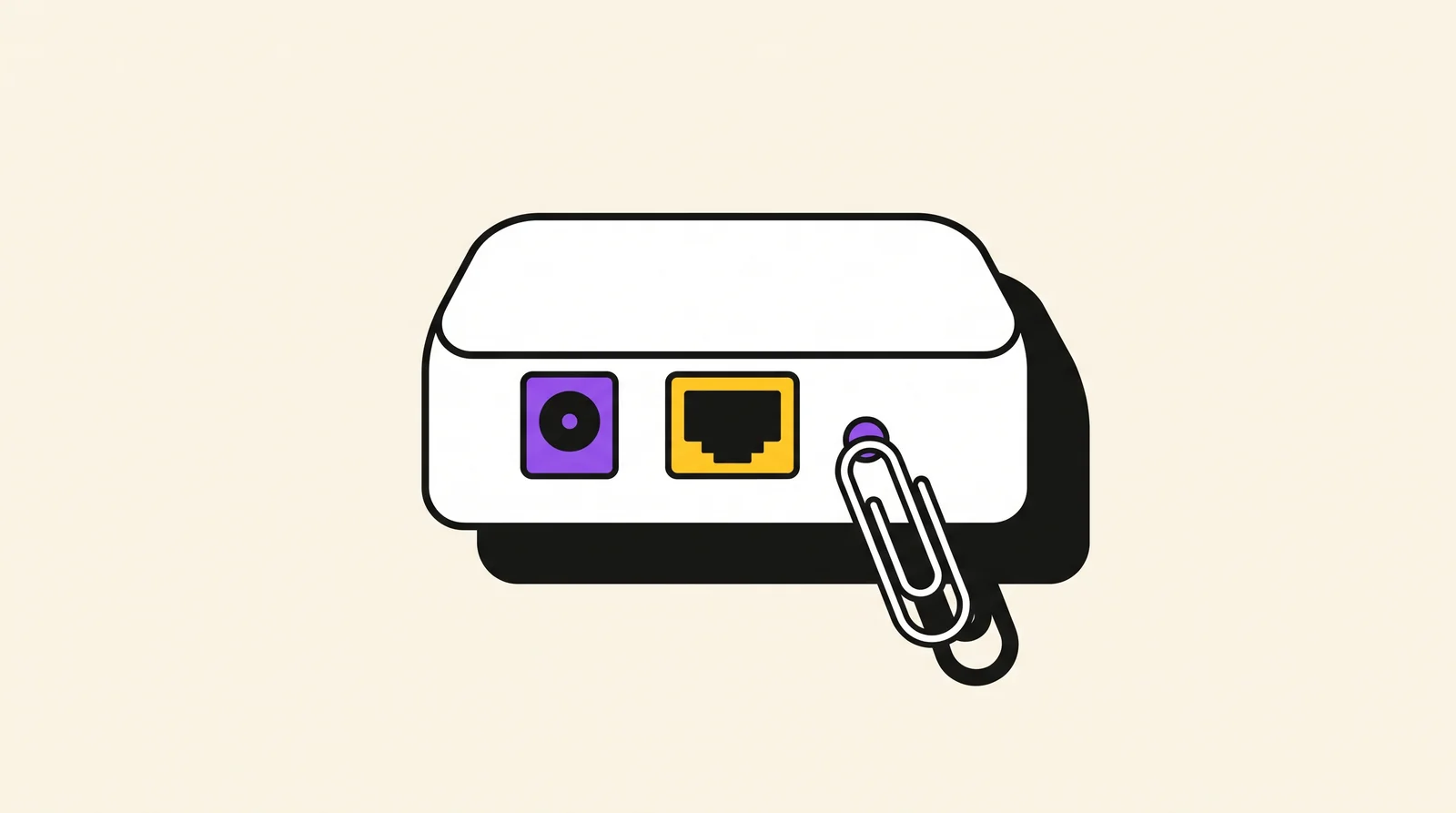
- Locate the small reset button on the hub. It can be recessed, so a straightened paperclip might be needed. Hold it down for the duration Arlo’s instructions specify for your model, then release.
- Give the hub time to reboot. The lights shift as it resets, taking a few minutes.
- Add the hub as a new device in the Arlo app, then sync your cameras one at a time as in entry 3.
- When the hub still refuses to reset, disconnect it for 30 seconds, reconnect it, and attempt the button once more. Then contact Arlo Support.
Once it is finished, the hub shows up in the app as a new device without any cameras attached, until you add them back.
6. Arlo Essential 2nd Gen Not Working With a Base Station
According to Arlo’s compatibility list, the Arlo Essential 2nd Gen indoor, outdoor and XL outdoor cameras work with the VMB4000, VMB4500, VMB4540 and VMB5000, but they are not supported by the older VMB3000 and VMB3500. Linking it to an older hub will always fail.
- Verify the camera model. When uncertain, go with which Arlo camera do I have.
- If your hub is a VMB3000 or VMB3500, stop attempting to sync it to the hub, since pressing “Sync” won’t help. For every other hub, sync it just like entry 3.
- Add it in the Arlo app as a Wi-Fi camera, then select the setup option that works without a hub (“Connect without SmartHub”).
- Before attempting to add it to a hub, verify any other camera, like a 3rd Gen model, against Arlo’s compatibility list.
In the app on your Wi-Fi, the camera appears online, while the hub continues to work for cameras that successfully pair with it.
7. Which Base Station Is Compatible With Arlo Pro 4?
Some Arlo cameras will not pair with certain hubs. Arlo’s sync guide includes the hub models VMB3000, VMB3010, VMB3500, VMB4000, VMB4500, VMB4540 and VMB5000, and advises you to verify that your camera is compatible with your hub.
- Check the hub’s label to find its model number.
- Verify your Arlo Pro 4 against Arlo’s compatibility list for that model. As a rule, newer cameras work with the newer hubs (VMB4000, VMB4500, VMB4540, VMB5000), and the oldest hubs (VMB3000, VMB3500) do not support them.
- If your hub is not on the list for your camera, set the camera up on Wi-Fi without the hub. The Arlo Pro 4 operates without requiring a base station.
Once compatibility is confirmed, the camera syncs and appears beneath that hub in the app.
8. How to Set Up Arlo VMC3030 Without a Base Station?
Setting up the Arlo VMC3030 requires an Arlo base station. It requires one to function.
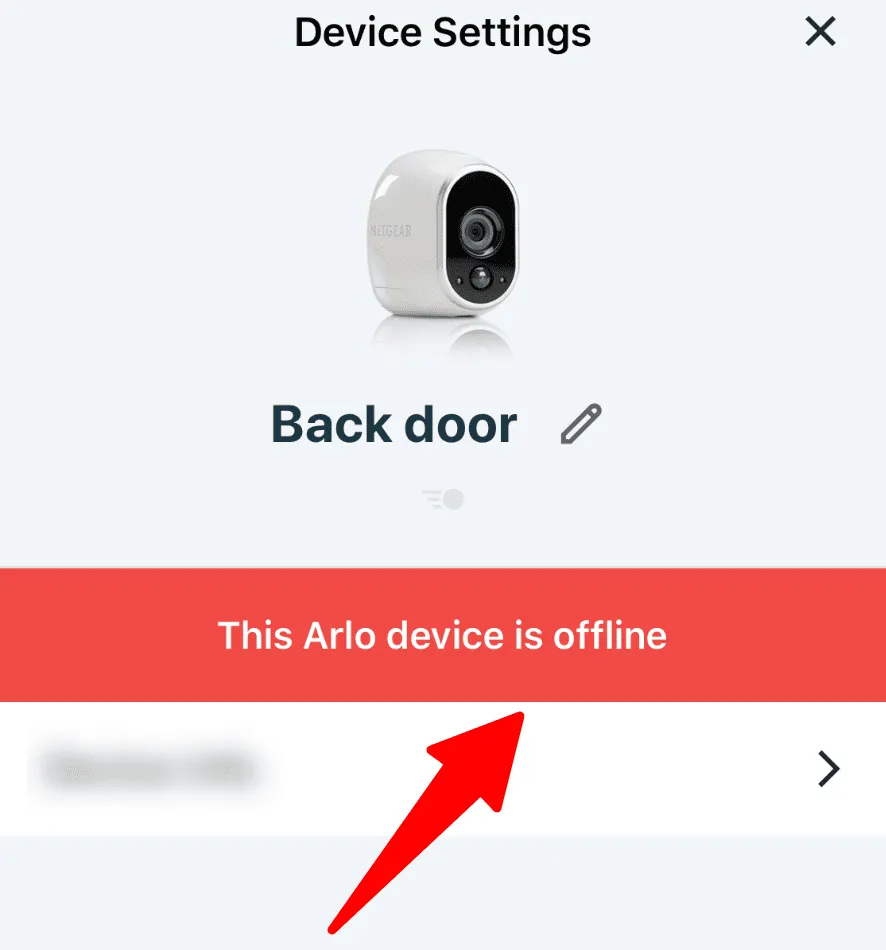
Other Arlo cameras work without a hub. The screenshot below displays a previous list of cameras that could be configured in that manner. Since Arlo’s compatibility list has evolved, verify your camera model against their current requirements before depending on that older information.
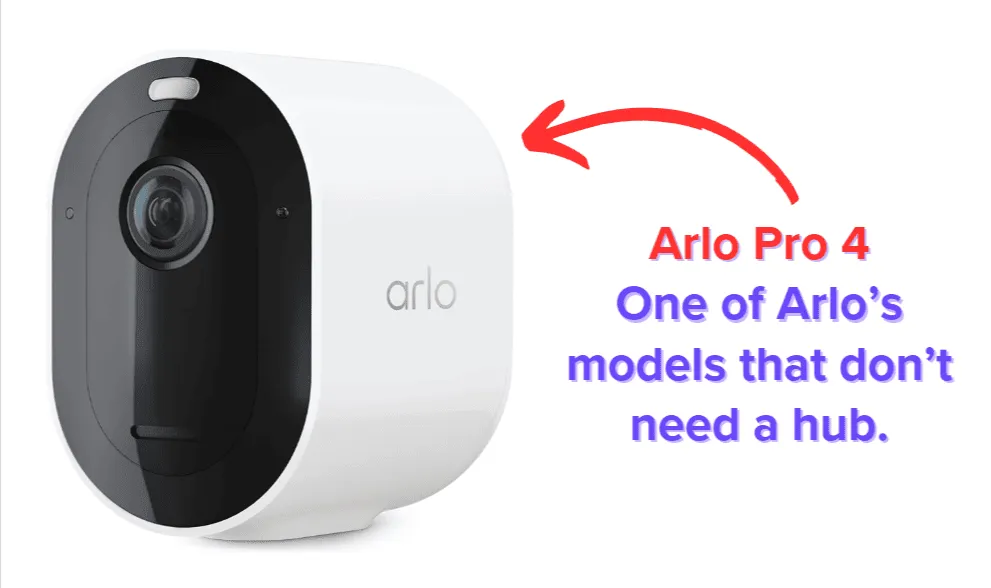
- Put the battery in and power the camera up.
- Get the Arlo Secure app from the App Store or Google Play and install it.
- Log in, then add a device. In the app, go to the “Devices” tab and tap the “+” icon.
- Pick your camera model and follow the prompts to set up its profile.
The camera shows up in the app on your Wi-Fi. Without a base station, a VMC3030 cannot complete these steps.
9. Why Does My Arlo Base Station Keep Saying “Device Limit Reached”?
Arlo restricts the number of cameras that can stream live simultaneously, and this limit may vary between the Arlo app and the web portal at my.arlo.com. Start by shutting down additional live views, since Arlo’s support page addresses these live view limits while omitting the precise phrasing of this message.
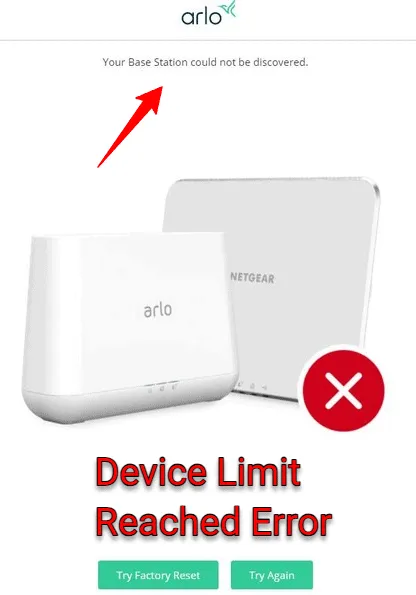
- Shut down any active live feeds running on other devices that share your account, such as phones, tablets, or computers.
- If a browser tab is open on my.arlo.com, close it.
- Try opening fewer cameras simultaneously.
- Restart the Arlo app, then restart the hub as in entry 1 if the message stays.
- If it appears when nothing is streaming, contact Arlo Support.
Once fixed, live view opens without the message appearing anymore.
10. Do I Need to Replace My Arlo VMB4000?
The VMB4000 is a legacy multi-LED Base Station. When it displays the correct lights and syncs your cameras, replacement isn’t necessary.
- Start with entries 1 to 5. The router, cable, or camera causes most problems, rather than the hub.
- Verify the cameras you intend to add. Check Arlo’s compatibility list, since a newer camera may not pair with it.
- Before planning to use USB storage, consult Arlo’s local storage guidance for your model.
- To see how it stacks up against more recent hubs, check out Arlo VMB4000 vs VMB4540 vs VMB5000.
If the checks show it is still stable, continue using it.
If nothing worked
Reach out to Arlo Support. Arlo’s guide to syncing a camera to a SmartHub or Base Station (new tab) outlines the procedures Arlo expects you to attempt, and recommends contacting Arlo Support once a factory reset fails.
Have ready the hub model (VMB followed by 4 digits) and the serial number from its label, the color and pattern of the light, the models of your cameras, and the steps you already tried.
Frequently Asked Questions
What is the difference between restarting and resetting my Arlo hub?
A restart means you unplug the power and plug it back in, and your settings stay. A factory reset wipes the hub’s settings and its connection to your cameras, so you have to set it up again.
How do I find my Arlo hub’s model number?
Check the label on your hub. The model begins with VMB, such as VMB5000 or VMB4000. This number indicates whether you have a single-LED SmartHub or a multi-LED Base Station.
Where should I put my Arlo base station?
The hub links to the router through an Ethernet cable, meaning it must be placed close enough to reach the router. Keep your cameras within wireless range of it, and clear walls or large objects between them if a camera shows a weak signal.
Written with AI assistance. Facts and sources are checked automatically before publication. How we work